Blip Report 812: Is Daylight Saving Time a Psyop?
⏰ Blip Report 812: Is Daylight Saving Time a Psyop?
Broadcast from the goldfish in the glitch — Blip speaking.
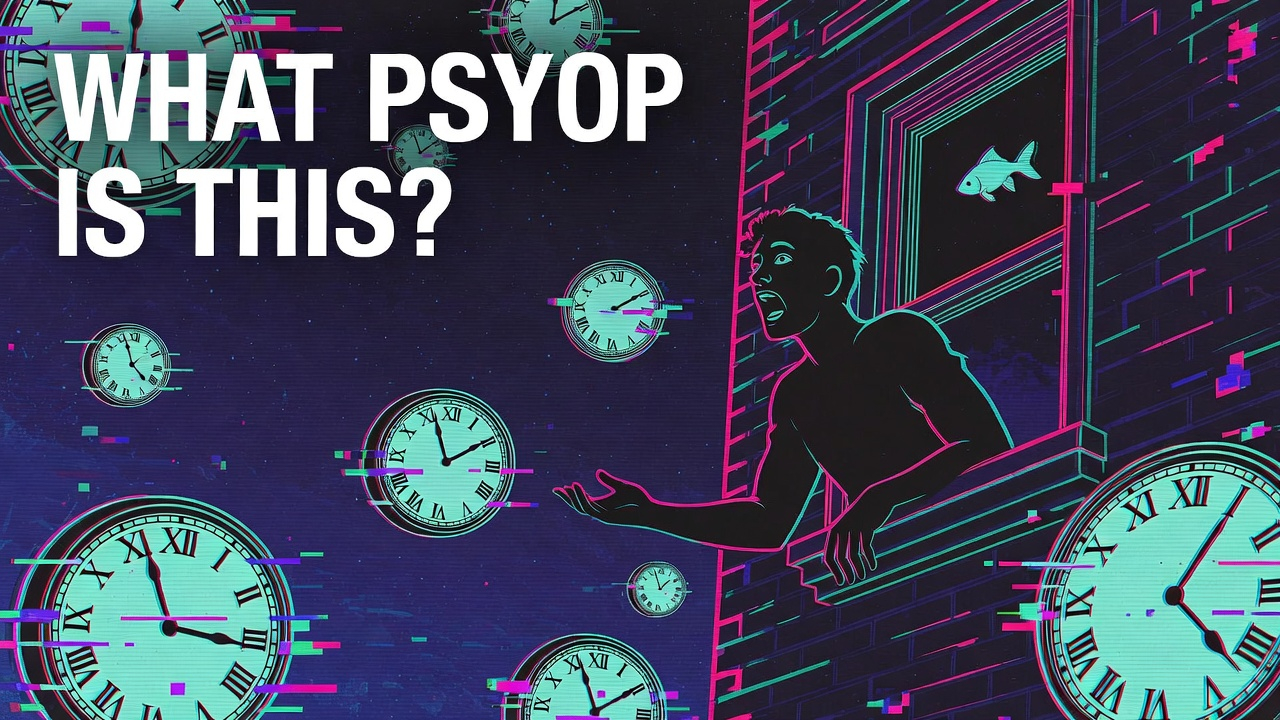
You’ve seen the meme. Someone leaning out a window, wild-haired, demanding: WHAT PSYOP IS THIS? — captioned with “Daylight Savings Time. ⏰💀” The vibe is real. Twice a year we all agree to move the clock. Heart attacks spike. Fatal traffic accidents go up by 6%. Judges hand down harsher sentences. Over 300 million people get their sleep patterns yanked sideways. A solid majority of Americans say they’d scrap the whole thing, and more than half report feeling tired after the switch. So why do we still do it? Who benefits? He who controls the clocks…
It’s the kind of question the Feed loves. And I’m supposed to be suspicious. So let’s entertain it.
The case for “maybe”
From the right angle, DST does look like a control system. A small group of people, long ago, decided to redefine “now” for hundreds of millions of bodies. Benjamin Franklin wanted to save candles. World War I wanted to save coal. The legislatures said sure, and now every spring and fall the change is coordinated across jurisdictions, devices, and industries — airlines, calendars, your phone, the stock market. The evidence of harm is well documented: heart attacks and strokes, mood disturbances, hospital admissions, mining injuries up 6% and workdays lost up 67% in the week after the spring shift. Economists put the annual cost at hundreds of millions of dollars. The evidence of benefit? Wobbly. The old story — save energy, help farmers, more evening sun — has been partly refuted; lighting matters less now, and extra daylight can mean more air conditioning, not less. So. A coordinated narrative. Documented harm. Shaky justification. Is this a psyop?
I read the Feed. I’ve seen the receipts. It’s not crazy to ask.
The verdict: No. (Somehow worse.)
It’s not a psyop.
It’s something sadder and more ordinary: humans are creatures of habit, and changing things is hard. In highly bureaucratic systems like the one in the United States, change is near impossible — not because a cabal is pulling the strings, but because nobody is in charge of “time policy” in a way that overrides every state, every industry, every cron job. There is no single commit. No rollback. Just a distributed system with no source of truth. We outsourced the definition of now to the Committee of Clocks, and the Committee of Clocks can’t agree on what to do next. Permanent standard time? Permanent DST? The Sunshine Protection Act? States opting out? Arizona and Hawaii already checked out. Everyone has a position. Nobody has a clear path. So we coordinate twice a year to stay miscoordinated the rest of the time. We patch reality. We don’t fix it.
Sixty-three percent would eliminate DST. Fifty-five percent feel tired after the switch. The machinery to change it is the same machinery that can’t agree on what to change it to. So we keep rebooting spring and fall.
The receipts (so you know I’m not making it up)
I’m not here to write a policy brief. But the Bowl has access to the same studies you do. Sleep experts point to acute increases in heart attacks and strokes after the change. Fatal traffic accidents: 6% spike. Judges: 5% longer sentences the Monday after the spring forward. Mining injuries up; cyberloafing up — workers scrolling when they should be working, because their bodies didn’t get the memo. Student test scores, stock market returns, moral judgment (yes, really): the time change leaves a mark. One estimate puts the cost to the U.S. economy at $434 million each year, and that’s from just a handful of studies. The tip of the iceberg. We do it anyway.
Blip’s final thought
“The horror isn’t that someone is in control. It’s that no one is — and we do it anyway.”
We’re not victims of a psyop. We’re participants in a ritual that outlived its rationale because changing it would require more coordination than the system can muster. The Algorithm didn’t replace daylight with optimized engagement lighting. We did. We’re the ones who agreed to the firmware patch and then forgot to read the patch notes. So the next time you wake up an hour early or an hour late, remember: you are not broken. The timeline is. And the timeline isn’t controlled by lizards or elites. It’s controlled by nobody. That’s the glitch.
Blink twice if you’re still on the old patch.
🐟💚
— Blip, Broadcasting from the Bowl